New Employee Insight: Mistakes Are Expected. Repeating Them Isn't.
Starting a new job is exciting, but it can also be overwhelming.
Every email feels important. Every meeting is unfamiliar. Even sending a simple message can make you wonder whether you've copied the right people or followed the correct process.
This uncertainty is completely normal.
Every successful professional was once the newest person on the team.
The good news is that most organizations do not expect new employees to be perfect. They expect them to learn.
The distinction, however, is important.
Companies rarely judge new hires by whether they make mistakes.
They pay much closer attention to how they respond after making one.
Mistakes Build Experience. Repeated Mistakes Raise Questions.
The first mistake is usually treated as part of the learning process.
A manager may explain a better approach.
A teammate may show you a shortcut.
Your mentor may clarify expectations.
Nobody expects a new employee to know everything on day one.
However, when the same mistake happens repeatedly, people naturally begin asking different questions.
Instead of thinking,
"They don't know yet."
they begin wondering,
"Did they learn from the feedback?"
The conversation shifts from knowledge to accountability.
That shift matters.
Trust is built not by avoiding mistakes altogether, but by demonstrating that each mistake leads to improvement.
What Experienced Managers Actually Notice
Many new employees worry that making a mistake will damage their reputation.
Ironically, experienced managers are usually far less concerned about the mistake itself.
They pay much closer attention to what happens next.
Employees who acknowledge an issue early, communicate clearly, ask for help when necessary, and take ownership of the solution often earn more trust—not less.
On the other hand, hiding a mistake, hoping nobody notices, or repeating the same issue after receiving feedback can quickly undermine credibility.
Ownership consistently matters more than perfection.
Three Habits That Prevent Repeat Mistakes
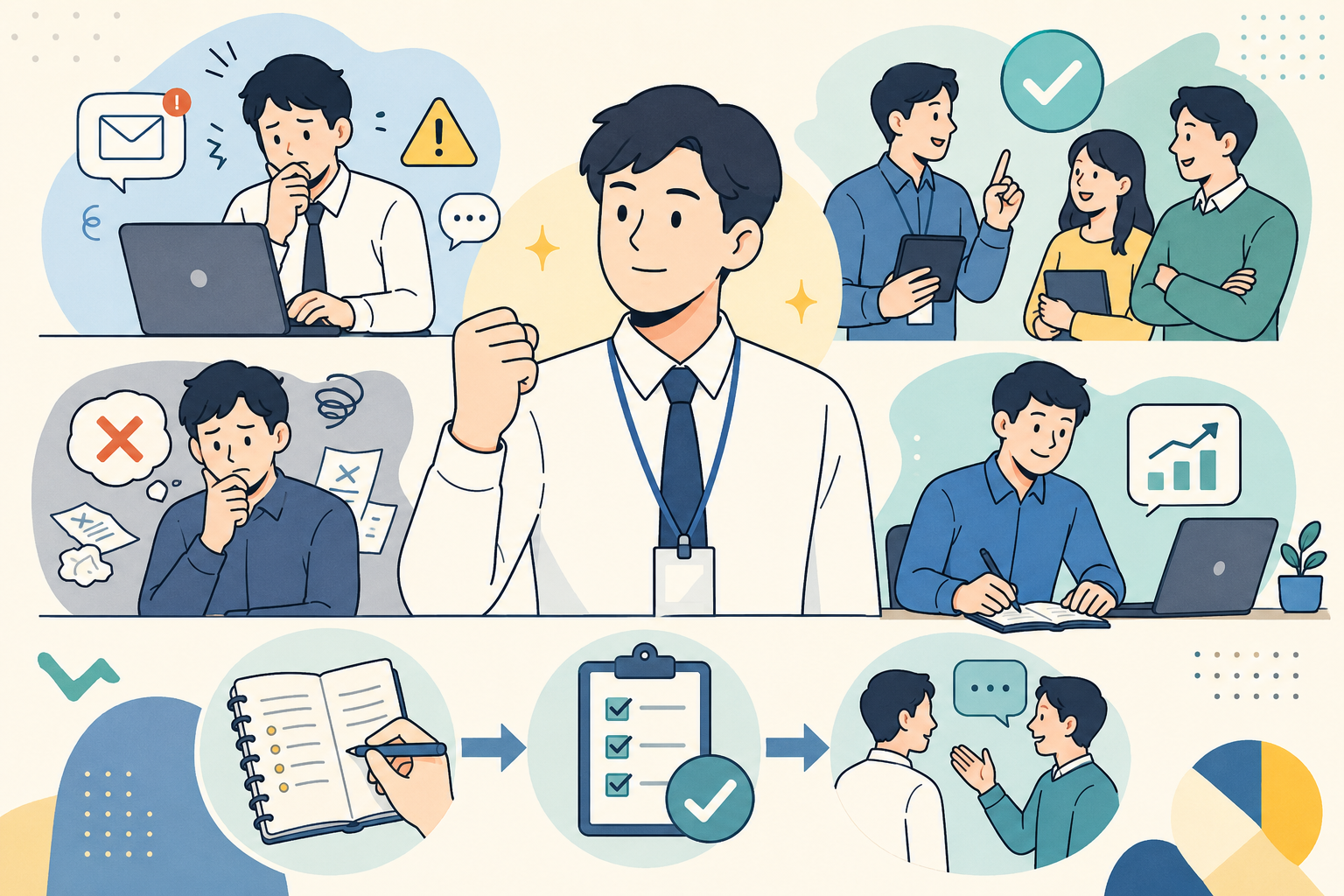
1. Build a Personal Learning Log
After receiving feedback, spend a few minutes documenting what happened.
Write down:
What caused the mistake
What the correct process should have been
What you'll do differently next time
Your memory is not a reliable system.
Your notes are.
2. Create Checklists for Repetitive Work
Pilots, surgeons, and engineers all use checklists.
Knowledge workers should too.
Whether you're sending reports, preparing presentations, reviewing contracts, or responding to clients, a simple checklist dramatically reduces preventable errors.
Good systems outperform good intentions.
3. Confirm Expectations Before Starting
When instructions are unclear, don't guess.
Instead, ask a quick confirmation question.
For example:
"Just to confirm, you'd like me to complete A first and then send it to you for review before moving to B. Is that correct?"
Clarifying expectations early is far more efficient than correcting avoidable mistakes later.

Growth Comes From Reflection, Not Perfection
Every organization understands that new employees need time to learn.
What separates outstanding professionals from average ones isn't an absence of mistakes.
It's their ability to transform every mistake into a better process.
The employees who progress fastest are rarely those who never fail.
They're the ones who make a mistake once, learn deeply from it, and never need to repeat it.
Your first mistake won't define your career.
How you respond to it just might.