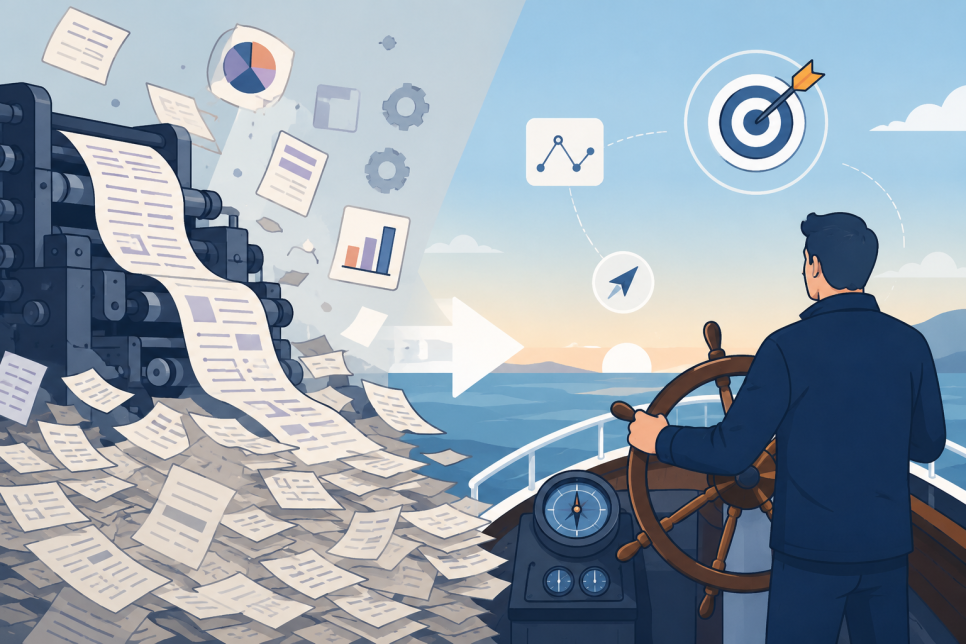
In the past, "productivity" in the office environment was strictly proportional to the visible volume of output or the physical hours spent sitting at a desk.
However, here in 2026, workers clock in with an invisible, ultra-high-performance "AI intern" right in their pockets.
We now live in an era where a 10-page proposal draft can be generated in just 30 seconds, and complex data coding is completed with a few lines of prompts. Simply declaring, "I generated a massive amount of text" or "I compiled the data quickly" is no longer a metric of true talent.
Now that the mechanism of work has fundamentally shifted from execution to inquiry, where should HR place the benchmark for "True Productivity"? Here are three new HR paradigms that will determine organizational survival.
1. The End of Quantitative Expansion: From 'Text Producers' to 'Helmsmen at the Wheel'
"If the prompt is mediocre, the output will be mediocre. Today, productivity stems from the depth of the question."
Anyone can mass-produce plausible reports with the click of a button; the quantitative baseline of output has been universally leveled up. Today, a true high performer is no longer someone who manually types out text, but a "Helmsman"—someone who directs the machine by throwing sharp, contextual prompts at AI to derive the desired results at lightning speed. The ability to define the core of a problem and design the right questions has become the definitive yardstick of productivity.
HR Insight Tip (Evaluation Strategy):
Immediately discard outdated KPIs that evaluate employees by the thickness of their proposals or the volume of emails sent. Moving forward, HR must establish "Problem Framing" (how accurately the employee defined the core issue) and "Resource Orchestration" (how efficiently they guided tools to achieve the final outcome) as the core evaluation metrics. Intent and direction, not volume, are the new scoring criteria.
2. Vigilant Quality Control: Moving Beyond 'Execution' to 'Context Curation'
"The eye that spots the 10% fatal error hidden within the 90% accurate answers generated by AI."
AI spits out results restlessly, but it is also prone to lying with absolute confidence—a phenomenon known as hallucination. A truly capable employee in 2026 is not a mere reporter who copy-pastes AI outputs. They act as a "Context Curator," taking the raw material provided by AI and carving it into a premium asset by intricately reflecting the company's strategic direction, unique brand tone, and the subtle, unspoken nuances of the market.
HR Insight Tip (L&D Strategy): The focus of Learning & Development (L&D) must shift from basic software literacy to critical thinking and contextual comprehension. Workshops designed to build "Vigilant Quality Control skills"—spotting logical flaws in AI-suggested data and screening for hidden risks—are now essential. Building an organizational defense against uncritical AI dependency is the new frontline for HR.
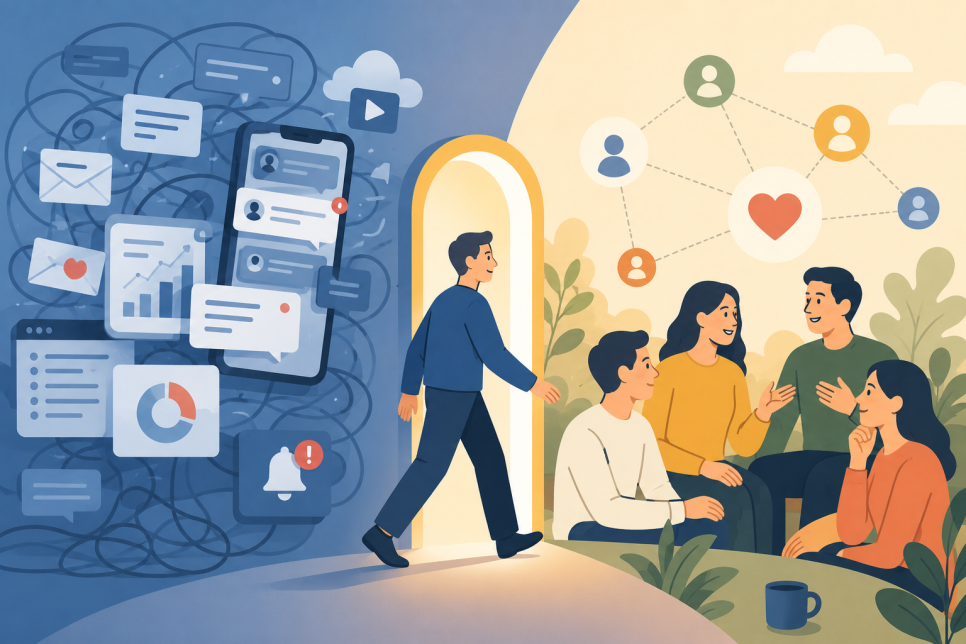
Ultimately, the answer lies in human capability.
3. The Antidote to Digital Oversaturation: Unleashing 'Relational Intelligence'
"When technology reaches a state of universal equilibrium, what truly moves an organization is ultimately human nuance."
As the hard skills of business are rapidly automated by AI, the ultimate differentiator lies in human capability. Consequently, soft skills now face an unprecedented premium in the talent market. The negotiation skills required to arbitrate conflicts, the emotional intelligence to detect a teammate's silent burnout, and the strategic acumen to untangle complex inter-departmental interests—these are domains that Large Language Models (LLMs) cannot replicate. An employee who fails to build human-to-human trust within a team will ultimately create an operational bottleneck, regardless of how brilliant their AI tools are.
HR Insight Tip (Compensation & Feedback): Rather than a "lone genius" who delivers high individual performance solely by running AI tools, higher rewards should be granted to the "Connector" who drives colleague engagement and sparks organizational synergy. The weight of relational competencies—such as the density of collaboration and contribution to psychological safety—must be drastically expanded in 360-degree reviews to humanly align an organization under digital oversaturation.
The Ultimate Takeaway
The office landscape has permanently changed. Every morning, employees step onto the corporate battlefield armed with the most powerful artificial intelligence in human history.
As an HR professional, the question you must ask yourself is clear:
"Are we still measuring labor that an AI can replace to evaluate our people?"
The truly high-performing organizations of 2026 do not micromanage their employees' minutes. Instead, they secure skilled helmsmen who handle AI deftly, control context with a fiercely critical eye, and clear the path so their talent can immerse themselves in the emotional connections and strategic decisions that only humans can make. It is time to reboot the HR mindset.